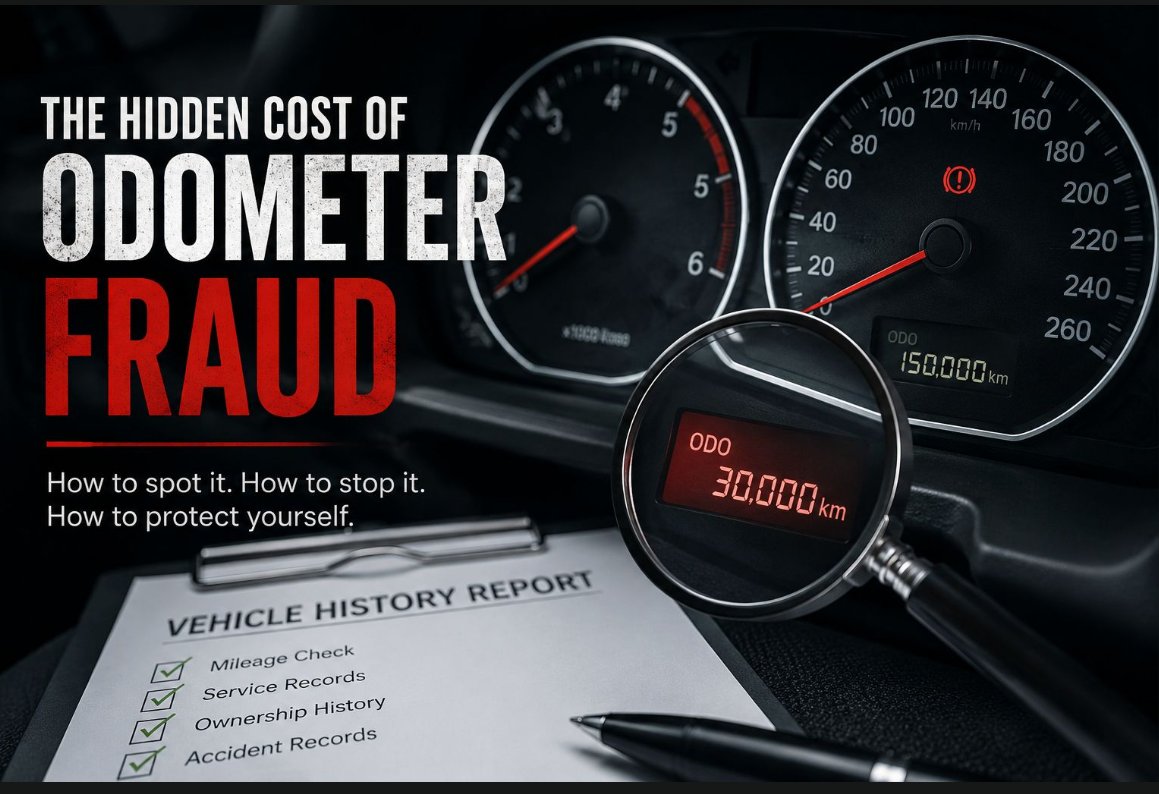
You find a used car online. The mileage looks great for its age — only 60,000 km on a 2018 model. The price is reasonable. The seller seems genuine. So you buy it.
Six months later, your mechanic tells you the engine wear is more consistent with a car that's done 180,000 km. That "low mileage" car was anything but.
Welcome to odometer fraud — one of the most common and most costly scams in the used car market, and one that's surprisingly easy to miss if you don't know what to look for.
How Big Is the Problem, Really?
Odometer fraud is far more widespread than most people think. Studies suggest that roughly 1 in 3 used cars sold privately in Europe has had its mileage tampered with at some point in its history. In Ireland and the UK, estimates put the annual cost of clocking (the term used for rolling back odometers) at hundreds of millions of euros per year.
Part of what makes it so common is how easy it's become. Modern digital odometers were once thought to be tamper-proof. They're not. Specialist tools that connect to a car's OBD port can reset digital mileage readings in minutes, and these tools are widely available online for under €100. There's an entire underground market for this service, with some operators advertising openly.
What Does It Actually Cost You?
The financial damage from buying a clocked car goes well beyond the purchase price.
Immediate repair costs
A car with genuinely high mileage needs more frequent servicing. Components like the timing belt, clutch, brake pads, tyres, and suspension bushings all have mileage-based replacement intervals. If the car has done 180,000 km but the odometer reads 60,000 km, you're inheriting a vehicle that's well overdue on multiple fronts — and you won't know it until something breaks.
Voided warranty claims
Many used car warranties and extended service plans are mileage-based. If you purchase a warranty assuming the car has 60,000 km on the clock, but a garage discovers the real mileage is triple that, your warranty can be voided entirely — leaving you exposed when the costly repairs arrive.
Lower resale value
When you eventually come to sell the car, a mileage discrepancy in the history will be flagged. You'll either struggle to sell it, or you'll take a significant hit on the price. The fraud that benefited the person who sold it to you now punishes you when you try to move it on.
Safety risks
This is the part that doesn't get talked about enough. A car with worn tyres, failing brakes, or a cracked timing belt isn't just an expensive inconvenience — it's a genuine safety risk to you, your passengers, and other road users. Odometer fraud doesn't just steal your money. In the worst cases, it can cost far more than that.
How to Spot a Clocked Car
There's no single foolproof method, but combining a few checks significantly reduces your risk.
Check the wear patterns
The interior of a car tells a story the odometer can't lie about. Look at the driver's seat bolster — is it heavily worn? Are the pedal rubbers cracked or nearly worn through? Is the steering wheel shiny from years of grip? Does the gear knob feel smooth where the plastic lettering used to be? These signs of use don't match a "low mileage" car.
Look at the service history carefully
A full stamped service book is great, but read it properly. If the intervals between stamps are inconsistent, or if the mileages recorded at each service don't follow a logical progression, something is off. Watch for big jumps or implausible gaps.
Check for OBD tampering signs
Some mechanics can check the ECU (the car's main computer) for signs that the mileage has been altered. This isn't foolproof as some tools also modify ECU readings, but it's another layer of protection.
Run a vehicle history check
This is the most reliable method available to a private buyer. A proper VIN check pulls mileage data from multiple points in the car's history — MOT tests, insurance claims, service records, and registration records. If there's a discrepancy between what the odometer shows and what the databases recorded two years ago, it will show up.
What to Do If You've Already Been Caught Out
If you've discovered your car has been clocked after purchase, your options depend on how you bought it.
Bought from a dealer: Under EU consumer law, you have stronger protections. You can pursue the dealer for misrepresentation. Document everything — the listing, any mileage claims made in writing or verbally, and the results of any subsequent checks. Citizens Information (in Ireland) or your national consumer authority can advise on next steps.
Bought privately: Private sales are harder. "Sold as seen" language limits your recourse. That said, if a seller specifically made a false mileage claim in writing — in a text message, in the ad, or in a signed receipt — you may still have grounds for a civil claim. A solicitor's letter is sometimes enough to prompt a settlement.
Either way: Report it to An Garda Síochána (or your national police) and to the relevant consumer authority. Odometer fraud is a criminal offence in most EU countries, and reports help build cases against repeat offenders.
The Bottom Line
Odometer fraud is one of those risks that feels abstract until it happens to you — and then it feels entirely avoidable in hindsight. The good news is that it largely is avoidable. A vehicle history check costs a fraction of what a single unexpected repair bill does, and it takes about 30 seconds to run.
Before you hand over money for any used car, run the VIN. It won't just tell you about the mileage — it'll show you the full picture of what that car has been through. That peace of mind is worth far more than the cost of the report.