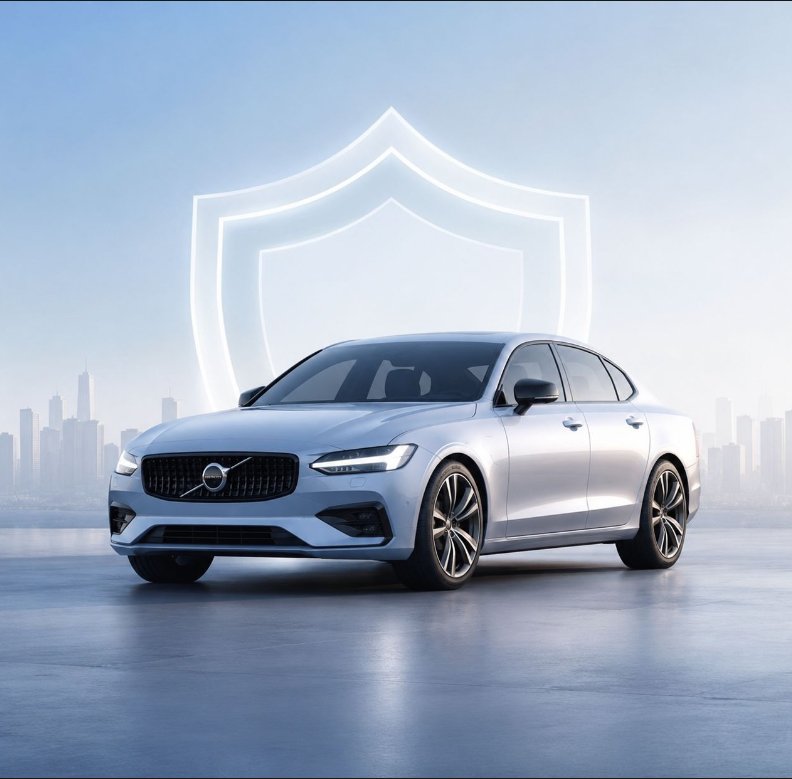
When you're buying a car, safety is one of those things that matters a lot in the abstract but can be surprisingly hard to assess in practice. Every manufacturer tells you their car is safe. Every listing mentions airbags and ABS. So how do you actually cut through the noise?
Euro NCAP — the European New Car Assessment Programme — is the most credible independent safety testing body on the continent. Their crash tests are rigorous, their ratings are independent, and their methodology evolves as car safety improves. A five-star rating in 2024 means something quite different to a five-star rating from 2015.
Here's a clear-eyed look at what the 2024 results tell us, and what you should actually pay attention to when buying a safe car — new or used.
What Euro NCAP Actually Tests
It's worth understanding what goes into a Euro NCAP rating before putting too much weight on the star count alone.
The assessment covers four areas, each contributing to the overall score:
- Adult occupant protection — how well the car protects the driver and front passenger in a crash
- Child occupant protection — safety for younger, smaller passengers in age-appropriate seats
- Vulnerable road users — how the car performs in collisions with pedestrians and cyclists
- Safety assist — autonomous emergency braking, lane keeping, speed assistance, and other active systems
The final star rating is a weighted average across all four. A car can score very well in adult occupant protection but drag its overall rating down with a poor showing in safety assist — which is increasingly how modern cars are differentiated.
The Standout Performers of 2024
Several models scored particularly well across all four categories in the most recent round of testing.
Volvo EX30
Volvo's reputation for safety is long-established, but the EX30 — their most compact electric vehicle — proved it's not just marketing. The car scored five stars with strong results across every category, including an impressive showing in the vulnerable road users section. The automatic emergency braking system is among the best-performing on the market for cyclist and pedestrian detection.
Toyota C-HR (2024 facelift)
The updated C-HR impressed testers with notably improved safety assist scores compared to its predecessor. The lane centring system — which actively keeps the car in its lane rather than just warning when you drift — worked consistently across a range of conditions, including poor weather and winding roads.
BMW 5 Series
Large executive saloons often do well in occupant protection because there's more structure around the passenger cell. The new 5 Series follows this pattern, but also scores well in the technology categories. The driving assistance suite works smoothly and doesn't require the driver to constantly override it — a problem that plagues some competitors' systems.
Renault Scenic E-Tech
A notable mention for Renault, whose safety credentials have improved dramatically over the past decade. The Scenic scored five stars with particularly strong child protection results — relevant if you regularly carry young passengers.
How to Think About Safety When Buying Used
New car safety ratings are useful reference points, but most people aren't buying new. When you're shopping used, the picture gets more complicated.
Check the original rating — and what year's protocol applied
Euro NCAP has become significantly more demanding over time. A five-star car from 2014 was tested against 2014 standards, which are considerably less rigorous than today's. Before reading anything into a star rating, check when the car was tested and what version of the protocol applied. The Euro NCAP website archives all results going back decades.
Safety features degrade if the car has been in an accident
This is the part that doesn't get said enough. A car's safety performance in a crash test assumes the vehicle is in factory condition. A car that's been in a front-end collision — even one that's been repaired — may have compromised crumple zones, damaged airbag sensors, or poorly realigned structural components. The car might look fine from the outside. The safety it was tested to deliver might not be there anymore.
This is exactly why a vehicle history check matters before you buy. An accident that was repaired cosmetically but logged in insurance databases will show up. A write-off that was re-registered will show up. The seller doesn't have to tell you. The databases do.
Check that safety systems are actually working
During a test drive, check that the lane keeping assist, automatic emergency braking warning lights, and blind spot monitoring (if fitted) all function correctly. Warning lights for airbag systems, or systems that have been disabled or removed after an accident, are serious red flags. If an airbag has deployed and been replaced with a non-OEM unit, it may not perform correctly in a subsequent impact.
The Safety Features Actually Worth Prioritising
Not all safety technology is created equal. Some features make a genuine statistical difference to crash outcomes. Others are primarily marketing.
Autonomous Emergency Braking (AEB) is the single most impactful active safety technology available. Studies consistently show it reduces rear-end collisions significantly. Prioritise cars that have it fitted as standard, not as an optional extra.
Lane departure warning vs. lane keeping assist — there's a difference. Warning systems tell you when you drift. Keeping systems actively steer you back. The latter is genuinely more effective, particularly on motorways over long journeys.
Multiple curtain airbags make a significant difference in rollover accidents and side impacts. Check how many airbags the car is fitted with and whether they cover rear passengers as well as front.
Electronic Stability Control (ESC) has been mandatory on all new cars sold in Europe since 2014, but check it's present and functioning on older used cars. It's one of the most statistically significant crash-prevention technologies ever introduced.
A Final Word
Safety ratings tell you what a car is capable of in controlled conditions. A full vehicle history check tells you whether the specific car you're looking at is still capable of delivering that safety. Both matter.
Buying a five-star car that's been in three unreported accidents is not buying a safe car. Knowing the full history of the vehicle you're considering is the step that bridges the gap between what a car was designed to do and what the actual car in front of you can do.