Buying a used car is one of the largest purchases most people make outside of property — and yet a surprising number of buyers do less due diligence on a €10,000 car than they would on a €100 hotel booking.
The result? Costly surprises. Repairs that shouldn't have been their problem. Money paid for a car that legally belonged to a finance company. Vehicles that had been written off and patched back together well enough to fool a casual viewer.
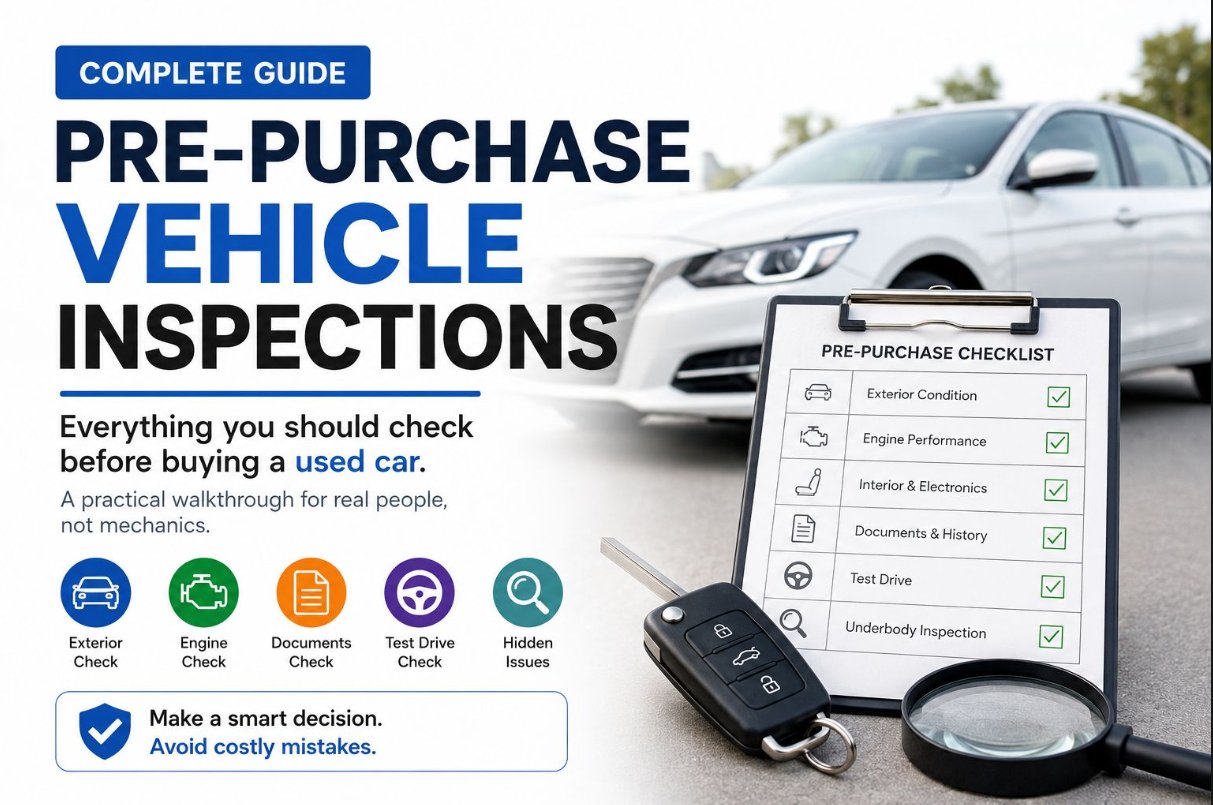
This guide covers everything you should do before handing over a single euro — from that first phone call with the seller to the moment the keys change hands.
Stage 1: Before You Even View the Car
Most buyers treat the viewing as the start of their due diligence. It shouldn't be. There's a lot you can establish before you ever set foot near the car.
Ask for the VIN upfront
A legitimate seller will give you the VIN without hesitation. It's printed on the registration document and stamped on the car — there's no reason to withhold it. If a seller won't give you the VIN before you view, that's either a sign of inexperience or something to be cautious about. Either way, always ask.
Once you have the VIN, run a history check. Do it before you drive to see the car. If the check comes back with a stolen marker or outstanding finance, you've just saved yourself a journey and a potentially expensive mistake.
Ask the right questions on the phone
Before you view, ask the seller directly:
- How long have you owned it?
- How many previous owners does it have?
- Has it ever been in an accident?
- Is there any finance outstanding on it?
- Why are you selling?
- Does it have a full service history?
You're not just gathering information — you're also checking whether the answers they give now match what you'll find when you inspect the car and run the check. Inconsistencies matter.
Check the price against the market
Use CarZone, DoneDeal, or AutoTrader to see what comparable cars — same make, model, year, and mileage — are selling for. A car priced significantly below market is either hiding something or the seller is under pressure to sell fast. Neither situation calls for skipping your due diligence.
Stage 2: The Visual Inspection
View the car in daylight. This sounds obvious, but a surprising number of buyers view cars in the evening or in poorly lit driveways — conditions that make paint defects, rust, and body repairs nearly invisible. If the seller can only show you the car at night, treat that as suspicious.
Walk around the outside systematically
Don't just glance. Crouch down at each corner and look along the body panels from a low angle. Ripples in the paint or uneven reflections indicate filler or panel beating. Check that panel gaps are consistent — gaps that are wider on one side than the other suggest accident repair or panel replacement. Open each door and look at the jambs for signs of overspray.
Check the paint carefully
A car that's been resprayed on one side will show slightly different paint texture, colour, or sheen compared to the original panels. Hold your hand flat against the painted surface and compare bonnet to wings, doors to sills. Even subtle differences are worth noting.
Check underneath
If you can safely get under the car — or if there's a pit available — look at the underside. Look for fresh underseal applied over rust, bent or straightened subframe components, or signs of weld repair. These are difficult to spot but worth looking for on older vehicles.
Open the bonnet
Look at the engine bay as a whole. Is it uniformly dirty or cleanly detailed? A suspiciously clean engine bay on a high-mileage car can mean someone has steam-cleaned it before sale to hide leaks. Look for oil seepage around gaskets, signs of overheating around the coolant system, and any obvious DIY repairs.
Stage 3: The Test Drive
Don't let a seller talk you out of a test drive. Ever. A car that can't be test-driven for "insurance reasons" or because it "needs a jump start" is a car with something to hide.
Start it from cold if possible
A cold start reveals things a warm engine doesn't. Blue smoke on start-up suggests burning oil. White smoke that persists after warm-up can indicate a blown head gasket. Diesel engines that are slow to start or clatter more than expected when cold are worth having looked at.
Test every system
It sounds tedious but run through everything: all windows, all mirrors, every air vent, the air conditioning, the heater, every speaker, the heated rear window, all exterior lights, and the handbrake. Check the infotainment system boots properly. Verify that warning lights on the dashboard all go out after startup — any that stay on need to be explained.
Drive it properly
Find a quiet straight road and accelerate firmly through the gears. Feel for hesitation, judder, or unusual noises. Then brake firmly — the car should pull up straight and true without pulling to one side. Take a few bends to check that the steering is responsive and that there's no clunking from the suspension.
Stage 4: The Paperwork
The physical inspection tells you about the car's condition. The paperwork tells you about its history. Both matter.
The registration document
Verify that the VIN on the registration document matches the VIN stamped on the car (usually visible through the base of the windscreen). Check that the seller's name is on the document. If it's in someone else's name, ask why — and be cautious.
The service history
A full stamp history is valuable but not infallible. Look at the mileage recorded at each service visit. Does it progress logically? Are there any big gaps? Do the garages that performed the services still exist and could you theoretically call them to verify?
MOT / NCT certificates
In Ireland, NCT certificates note mileage at the time of the test. Look at the sequence — it's another way to cross-reference the odometer reading against independent records.
Stage 5: The Negotiation
If you've found genuine issues — a repair that wasn't disclosed, a mileage discrepancy flagged by the history check, a fault on the test drive — use them as grounds for renegotiation. You're entitled to. A seller who refuses to budge at all on price when you've identified specific issues is either in denial or inflexible in a way that should give you pause.
Get any agreements in writing. If the seller is fixing something before handover, document it. If they're including extras, document it. A receipt that clearly describes the car, its mileage, and the agreed price protects both parties.
The One Step Most Buyers Skip
Of everything in this guide, the step with the highest return on a small investment is the VIN check. It costs less than a tank of petrol and takes 30 seconds. It will tell you things the seller either can't or won't — outstanding finance, accident history, stolen status, mileage fraud, and more.
The cost of skipping it, if you're unlucky, can run into thousands. The cost of running it is pocket change.
Do it before you view. Do it before you fall in love with the car. Do it while you can still walk away easily.